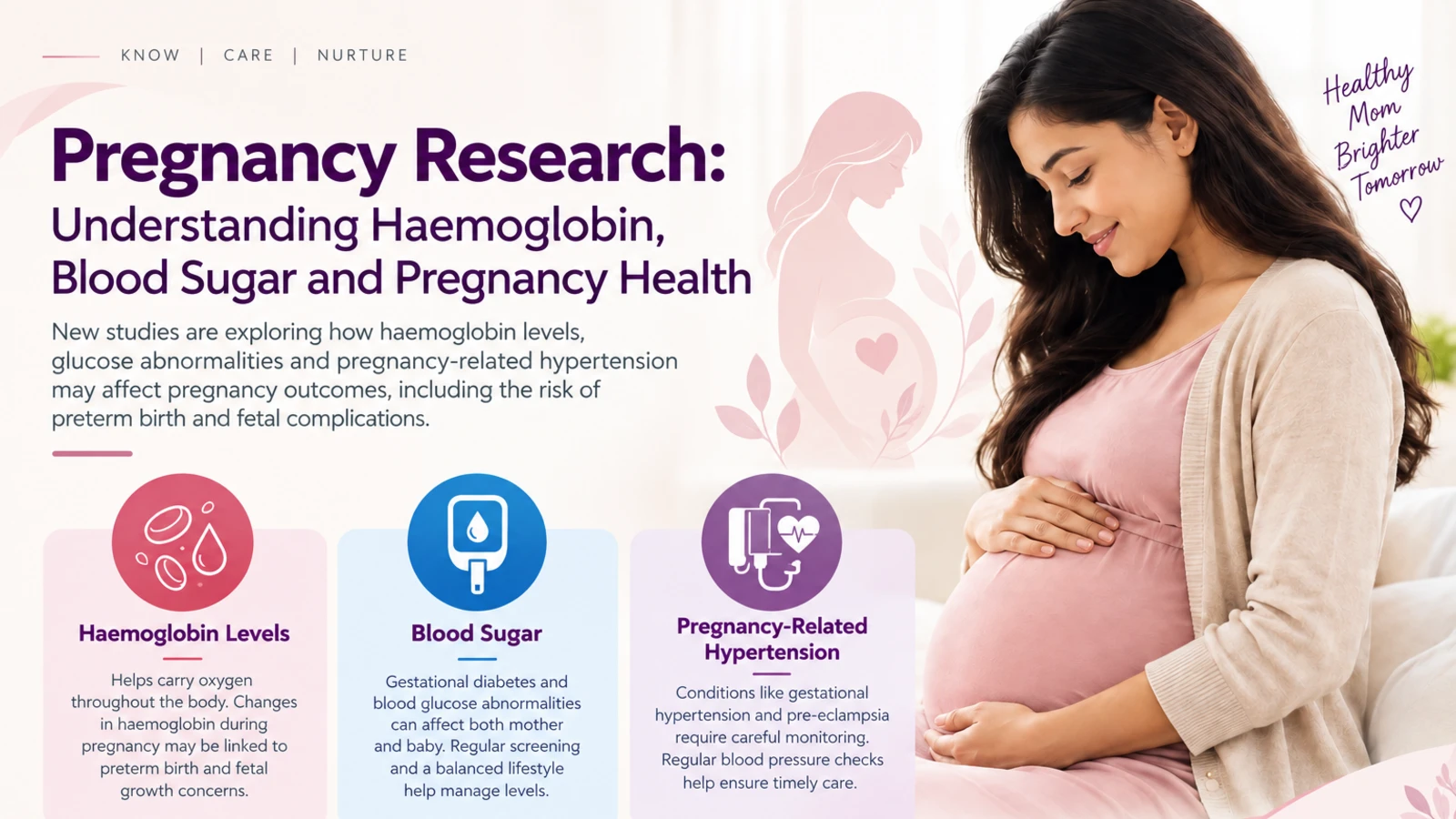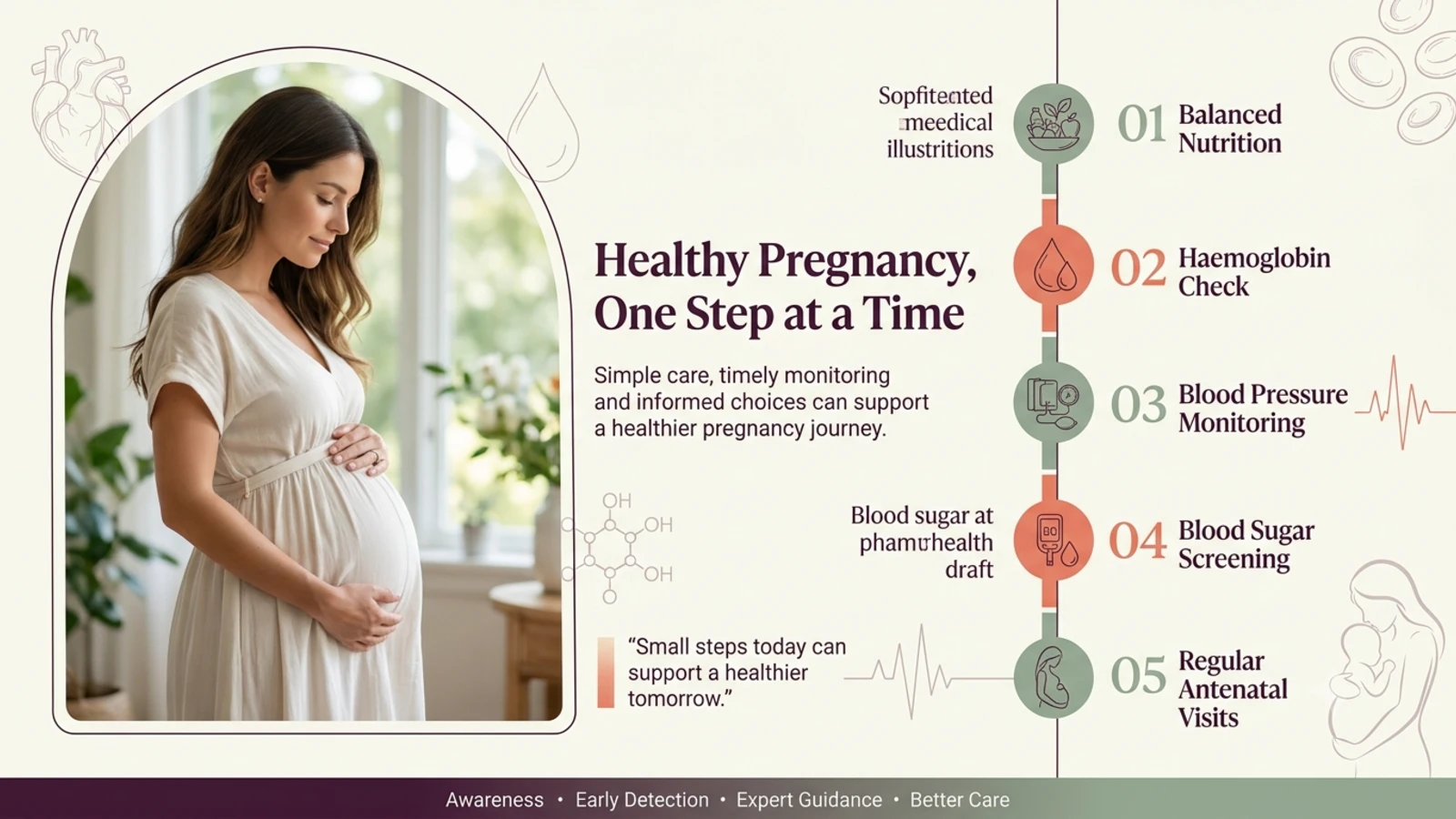
Pregnancy is more than a journey—it is a period of continuous care, monitoring and healthy choices.
During pregnancy, regular antenatal care helps healthcare professionals monitor both the mother and developing baby. WHO guidance includes maternal and fetal assessment, nutrition counselling, blood tests and screening for conditions that may affect pregnancy.
🩸 2. Keep an Eye on Haemoglobin
Haemoglobin testing is an important part of routine antenatal blood testing because it can help identify anaemia and guide appropriate care, including iron and folic-acid supplementation when indicated.
🩺 3. Regularly Monitor Blood Pressure
Blood-pressure measurement is recommended throughout pregnancy. Screening for pre-eclampsia is also part of antenatal care, particularly after 20 weeks of pregnancy
🩸 4. Understand Blood Sugar
Gestational diabetes can develop during pregnancy. WHO guidance includes blood-glucose testing around 24–28 weeks, helping healthcare professionals identify women who may need further evaluation or management
👶 5. Don't Miss Antenatal Check-Ups
Regular contact with healthcare professionals provides opportunities to monitor maternal health, fetal growth and potential complications. WHO recommends a comprehensive antenatal-care approach throughout pregnancy.
A healthy pregnancy is supported by regular check-ups, appropriate nutrition, timely screening and professional medical guidance. Every pregnancy is different, so individual care should always be discussed with a qualified healthcare professional.